On World Rhino Day 2026, South Africa’s Department of Forestry, Fisheries and the Environment announced updated rhino poaching statistics for the first eight months of the year.
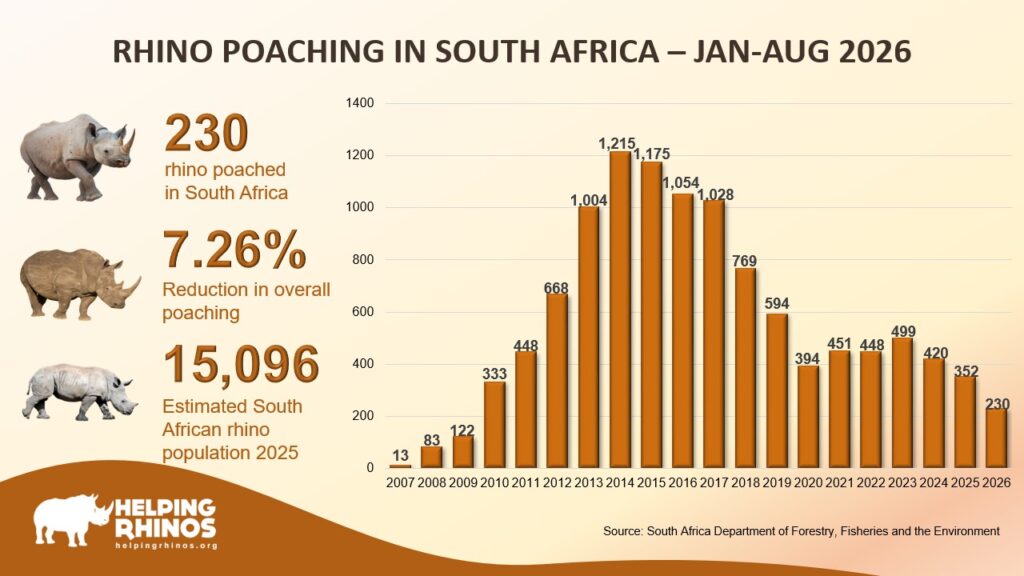
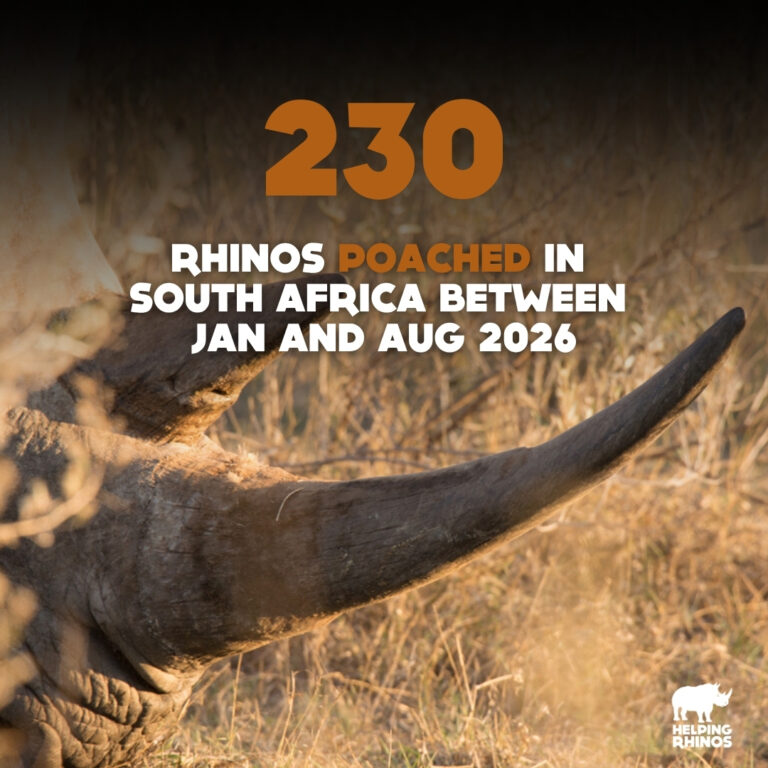
In the brief update the department stated that 230 rhinos have been killed by poachers across South Africa between January and August, compared to 248 during the same period in 2025. This marks a 7.26% reduction in poaching, with the Kruger National Park and the province of KwaZulu-Natal (KZN), both historic rhino poaching hotspots, seeing reductions in overall poaching numbers for the period. Kruger has lost 114 rhinos so far in 2026 compared to 123 in the same period in 2025, while KZN saw a marked decrease from 67 rhinos lost in the first eight months of 2025, down to 29 in the same period this year. However other provinces did see increases in their losses, with both Mpumalanga and the North West suffering heavier losses than the previous year. (Source) This relocation of poaching pressure is something we have seen before, and a reminder that rhino protection is only as strong as its weakest link. So long as there is demand for horn, poachers will relocate their operations to find weaker targets.
The decline in poaching numbers within Kruger and across KZN are welcome indicators of a renewed commitment from the South African government through their Rhino Renaissance programme, and are to be commended. The relocation of poaching pressure is as always something to be monitored. Only a coordinated defence will be effective against the organised criminal syndicates who power the poaching machine.
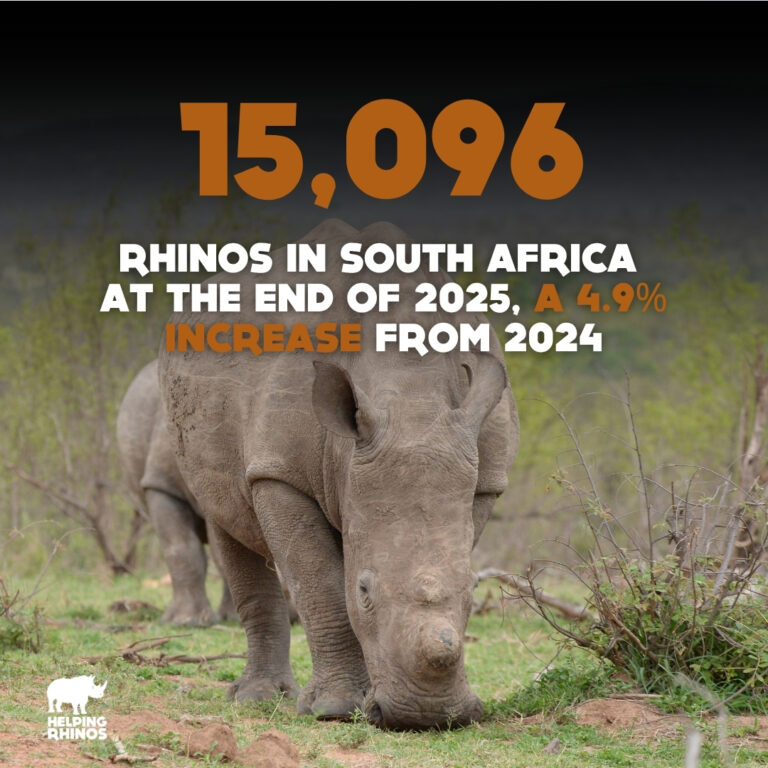
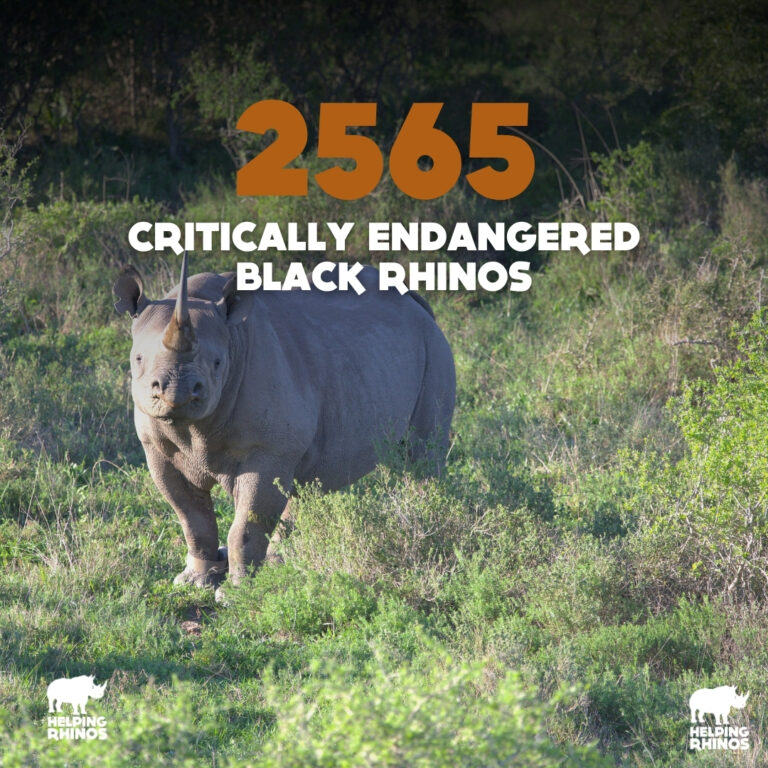
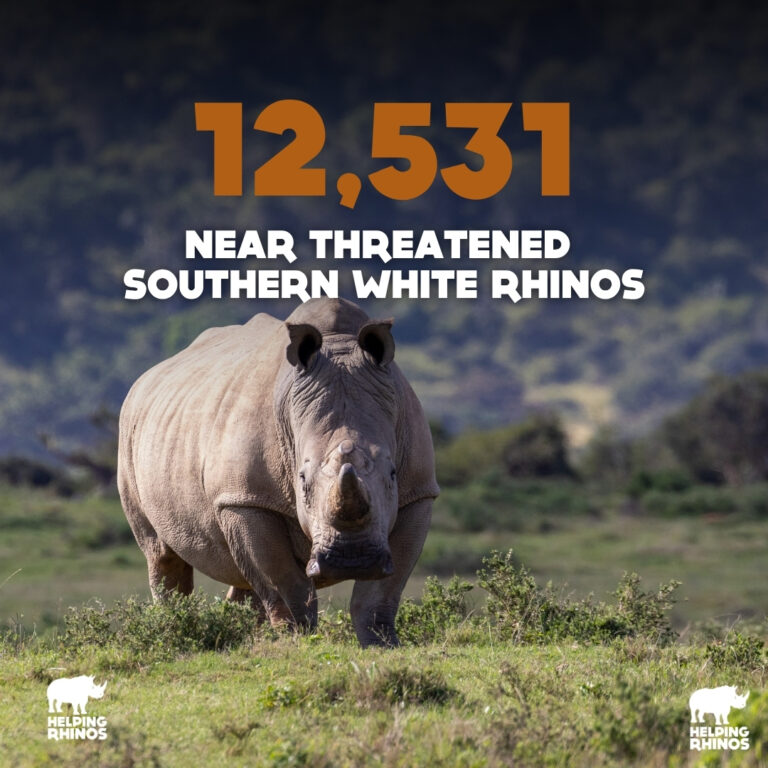
We were encouraged to see that alongside the poaching statistics population numbers were also supplied. South Africa’s national herd is estimated to stand at a minimum of 15,096 animals at the end of 2025. Broken down this consists of 2565 Critically Endangered black rhinos, and 12,531 Near Threatened southern white rhinos. This marks a 4.9% increase in the country’s rhino population from 2024 to 2025. The statement also confirmed that poaching losses in 2025 accounted for 2.2% of the national herd. While this is still a notable percentage of the population, it is below the 3.5% population sustainability threshold – the point at which more rhinos are killed than are being born.
HOW YOU CAN HELP
While a drop in poaching and a rise in population are signals of recovery and certainly achievements to be commended, we are still a long way from stable, secure rhino populations. These indicators signpost that many things are being done correctly, but the threat of the illegal wildlife trade and habitat loss still loom large in the rhino’s future. We have the tools to protect rhinos in their natural habitats for generations to come, but we must ensure that current momentum is not lost. Small gains that have taken many years to achieve can be reversed in a night; this is no time to rest on our laurels. Please donate today to support a future where rhinos don’t just survive, they thrive.
Click here to read the full media release from the South African Government.