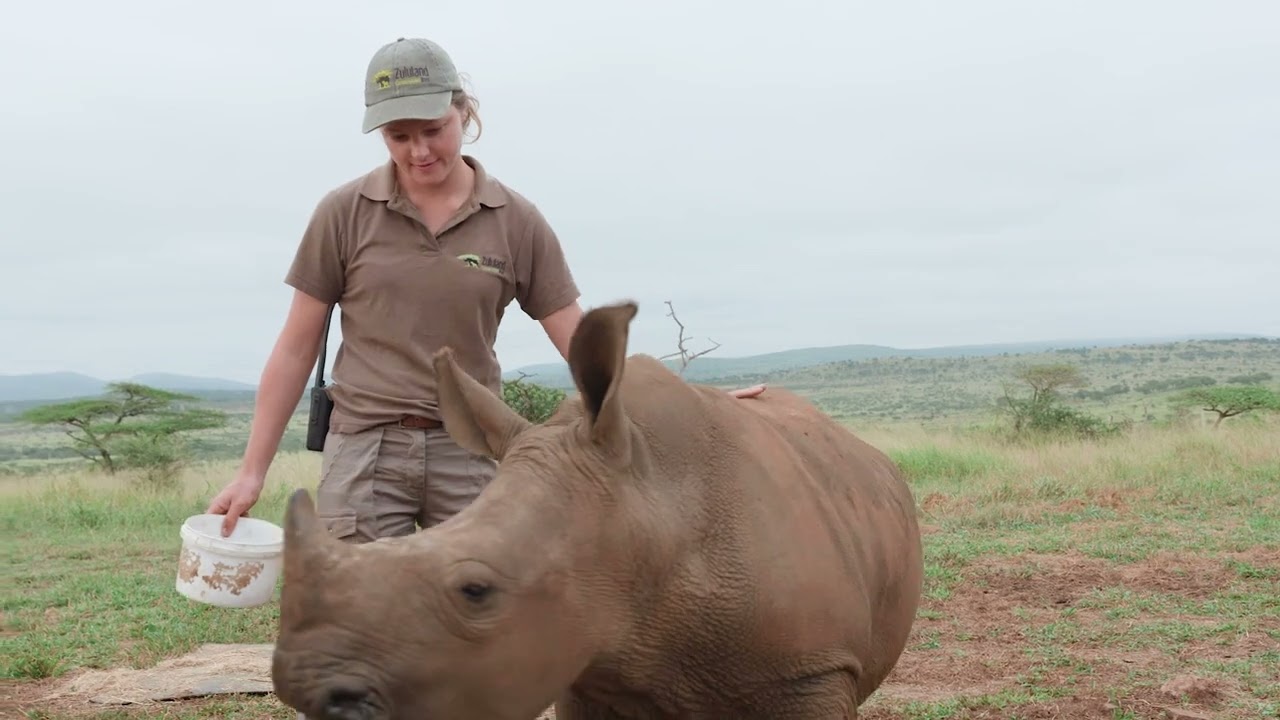
Zululand Rhino Orphanage was created by the Zululand Conservation Trust and Helping Rhinos in response to a poaching incident at our previous orphanage partner in 2017.
The Zululand Rhino Orphanage facility exists to care for rescued orphan rhinos. The orphans rely heavily on our carers for the first three to four years of their lives when they receive dedicated around the clock care, love and protection. Our ultimate aim is to rehabilitate these survivors and return them back into the wild where they belong.
To date we have successfully released 16 orphans back into the wild, where they are closely monitored to ensure they adapt well to their life in the wild. This monitoring also helps protect them from poachers and other threats to their survival.
With the help of the parent Game Reserve security and collaboration with the neighbouring local communities, the orphanage is well protected and the location kept secret.
The Challenge
With the unprecedented increase in rhino poaching in the last decade we have seen a huge rise in the number of rhino calves left orphaned as a result of attacks on their mothers. The calves, far too young to be alone in the wild are left abandoned, often refusing to leave their dead mother’s side. And in the most extreme cases poachers will attack the baby to stop it ‘interrupting’ them while they try to remove the horn from its mum before the anti-poaching patrols reach them.

The importance of facilities like the Zululand Rhino Orphanage cannot be underestimated as we strive to save every rhino that we can. This endangered species is facing a very uncertain future thanks to the actions if the human race and we need to do everything we can to try to save them because they are very special and they need our help.
With thousands of rhinos lost to poaching since the start of this spike back in 2008, every life matters as we work to save one of Africa’s most iconic species. While in some locations poaching has decreased in recent years, KwaZulu-Natal is experiencing some of the heaviest poaching on the continent. As the only dedicated rescue and rehabilitation centre in the region, the facility is critical to saving the lives of as many rhinos as possible
Make a Donation
We are truly grateful for every gift we receive – THANK YOU.
To donate in USD or EURO, please visit our DONATE page.
Meet Our Orphans
Learn more about each orphan and how you can support their journey by adopting a rhino.
For security reasons the Zululand Rhino Orphanage is in a secret location and is not open to the public.
Adopt a Rhino OrphanCase Study – Rhino Orphan Mulayo
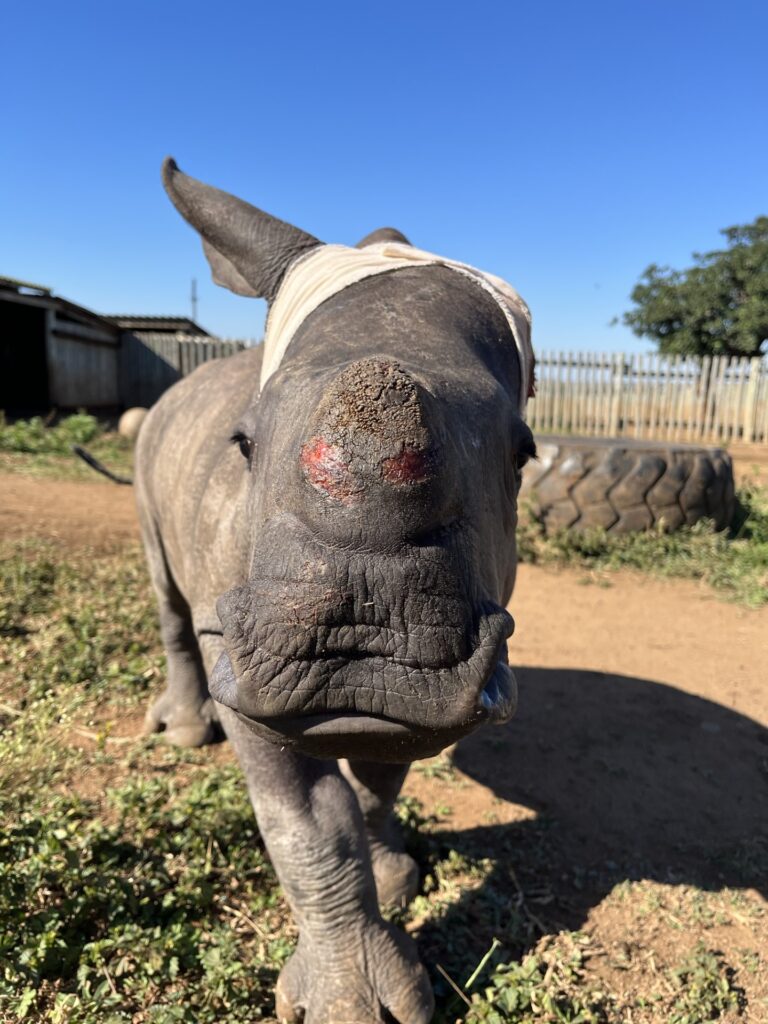
In one of the most distressing rescues our team has ever performed, a young calf was found next to the body of her dead mother. She had been killed by poachers, but they had also attacked her young calf, leaving her with open wounds to her neck and ear. At just two months old she had tried to defend her mother from the poachers. The severity of the wounds would mean that one of her ears would have to be amputated, leaving a physical reminder of the trauma she had undergone.
The calf was named Mulayo, taken from the Zulu word Ekhazimulayo, meaning Radiant, the perfect name for this courageous young rhino. Despite having to overcome so much in her young life Mulayo settled well at the orphanage and has formed deep bonds with her fellow orphans.
Mulayo’s story started in tragedy, but she is now growing into a healthy and happy adolescent rhino, who will one day return to the wild where she belongs. This story of triumph is a testament to the dedication of our care team, Mulayo’s adopters and our supporters.
Our Impact
To date, our achievements include:
The care of 35 rhinos and two hippos
This includes, but is not limited to, ensuring nutritional sustenance through milk and supplemental feed, as well as veterinary care and attention to ensure our orphans are in good physical health. Mental stimulation and the encouragement of natural behaviours is also a key aspect of our orphans’ rehabilitation, as is caring for their emotional needs following the traumas many of them go through losing their mothers.
The release of 14 rhinos (and two hippos) back to the wild
Sixteen of our orphans have been successfully released back into the wild and we receive regular updates on how they are doing. All our rewilded orphans are fitted with tracking collars to ensure the teams on the ground can keep a close eye on them to ensure they are settling well in the wild and to keep them safe from the risk of poaching. Re-wilding our orphans gives them the chance to function as part of their natural habitat, playing an important ecological role whilst also having the chance to add to future generations of their species.
The expansion of the orphanage facilities, doubling the capacity
Sadly, rates of rhino poaching have soared within the KwaZulu-Natal province in the past few years, and more poaching means more orphans. To cope with the influx of orphans we have expanded the facility doubling our capacity, which means we can take in and care for many more orphans should the need arise. This has involved the creation of a second ICU, an expanded outside boma area and facilities for our dedicated team of carers.
Enhanced security measures for the Orphanage site
Tragically even rhino orphanages are not immune from the risk of attack, and security is paramount. This is why the location of our orphanage is kept secret and anti-poaching units are deployed on site. As part of our security protocols, we have now added cameras to all our rhino bomas (outside areas), meaning our orphans can be monitored at all times. Along with our upgraded camera system, a strong perimeter fence is a key security factor. Recent upgrades have meant that our fence is now stronger than ever.