For too long conservation operated as an exclusive club, creating fortresses and shutting out local people. Communities were overlooked, or worse viewed as a threat to the wild spaces they lived alongside.
But conservation cannot operate in a vacuum.
To be truly effective we know conservation depends on community. If we want to ensure a future for rhinos, and the habitats they call home, then we must also ensure a stable future for the people who live alongside them.
Helping Rhinos is more than dropping fences, patrols, and protection on the ground. We know the key to lasting change is sustainable engagement with those living shoulder to shoulder with rhino. That is why we work with Partners, such as the Kariega Foundation, who share our vision of sustainability and collaboration.
The Situation
Instability amongst communities living alongside wild spaces is one of the greatest threats to effective conservation. High rates of unemployment, poor access to education and few career pathways are all factors that affect how communities view and engage with conservation efforts on their doorstep. Feelings of being in competition with highly guarded and cared for wildlife can creep in, creating resentment and weakening trust. There is no place for the historic model of ‘Fortress Conservation’, vilifying and shutting out the people who live alongside our wild spaces. By including and really listening to these communities, we often find nature’s greatest allies.
Where unemployment is high and access to education is limited, communities often face immediate economic pressures that can overshadow long-term environmental priorities… Kariega Foundation creates pathways for education and employment that link social development directly to conservation. When communities thrive socially and economically, they become strong partners in protecting rhinos.
Our Impact
To ensure strong and stable links between conservation and community we must listen to what those living side by side with nature have to say. Community support is not support when people are dictated to, but when we give people a seat at the table and work together to meet actual needs, long term progress is made.
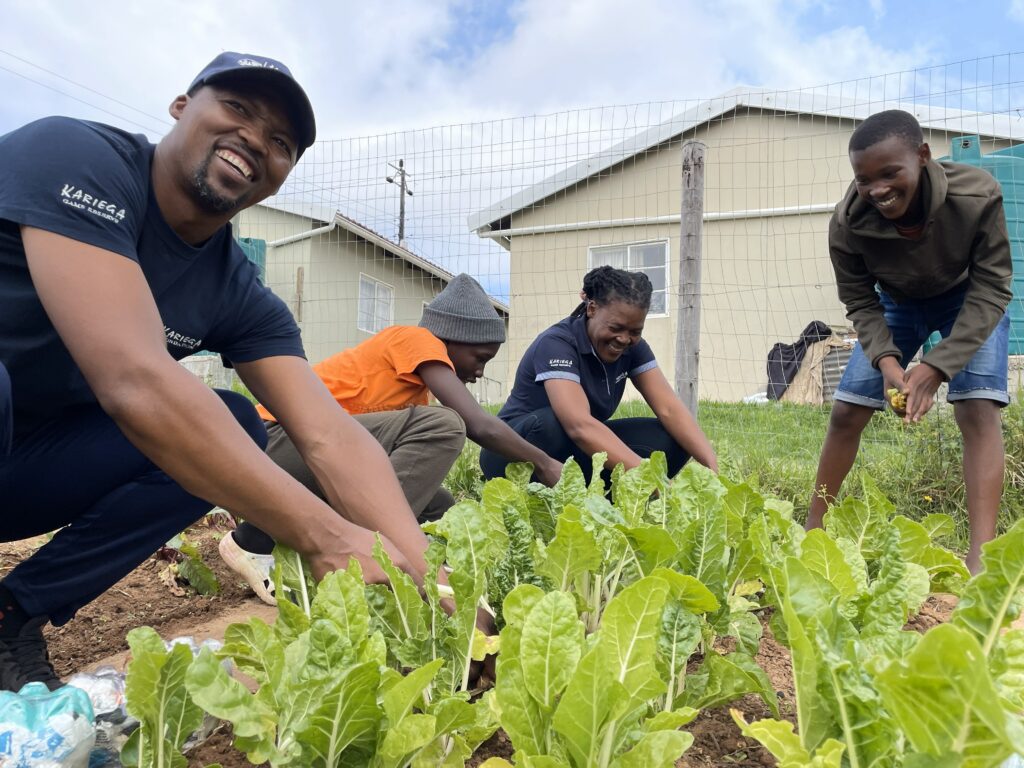
“Cradle to Career” is the Kariega Foundation’s flagship initiative to ensure sustainable, long-term support for the people living on the borders of the Kariega Game Reserve. Alongside having 95% of their anti-poaching unit drawn from local communities, the Kariega team are supporting early years education, implementing youth sports leagues, providing Social and Emotional Learning in schools, and creating career pathways to ensure sustainable livelihoods derived from conservation.
Education and employment are not just benefits for people; they are critical tools in building sustainable conservation outcomes where wildlife and communities succeed together.
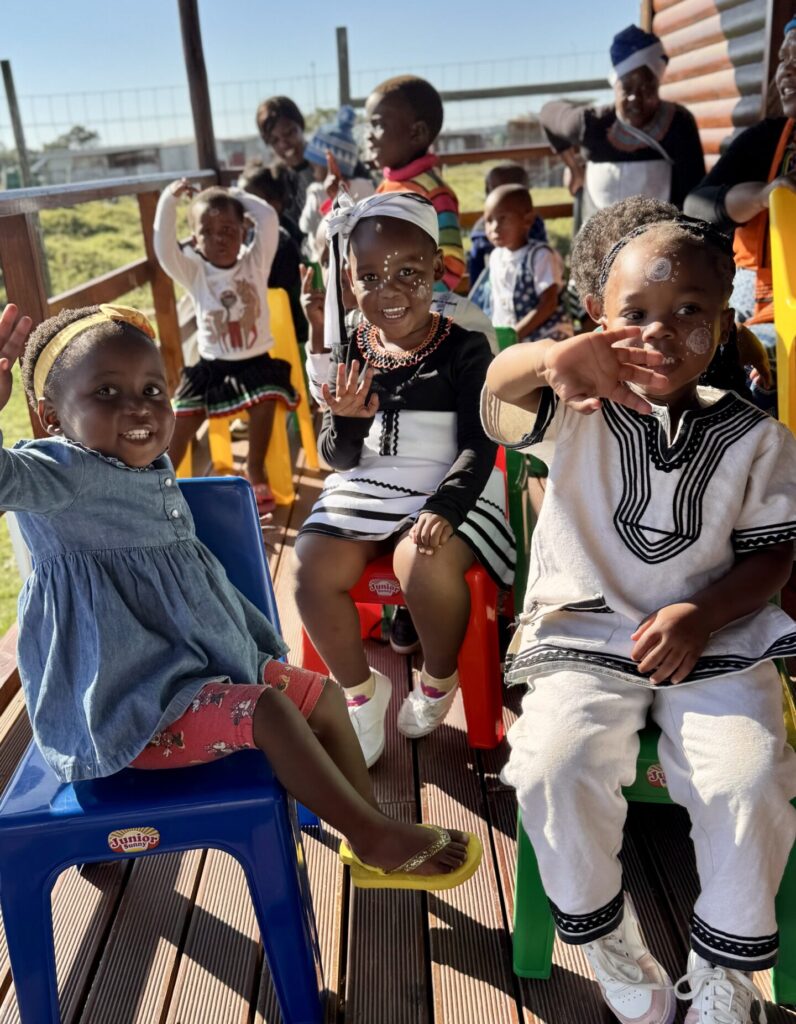
Alongside the Save a Child Foundation, Helping Rhinos is very proud to have funded the building of the Liggerman Education Centre, a key community hub asked for by a group of local young mothers, where 40 children are now receiving an early years education, and two of the mothers are employed as teaching assistants.
In 2024 we worked with the Kariega Foundation and Global Conservation Force to upskill 11 local recruits in a 5-week intensive training course to become anti- poaching rangers. For many rangers it is a calling, and these 11 passionate conservation heroes were equipped with the skills and knowledge they needed to achieve their ambitions to protect their natural heritage and progress their careers.
And in 2025 attendees of our Conservation Safari helped us fund further community-based ranger training, this time focusing on Field Rangers. Local men and women were supported in a 12-month programme from the Eastern Cape Occupational Development Academy (ECODA), facilitated by the Kariega Foundation, to become accredited Field Rangers and go on to gainful employment with real career progression.
But this work did not come out of nowhere. The Kariega Foundation has been building relationships and trust with the communities they live amongst for many years. Like so many things in conservation this is not about fast wins. This is about scalable, sustainable initiatives that deliver tangible benefits for people and wildlife alike.
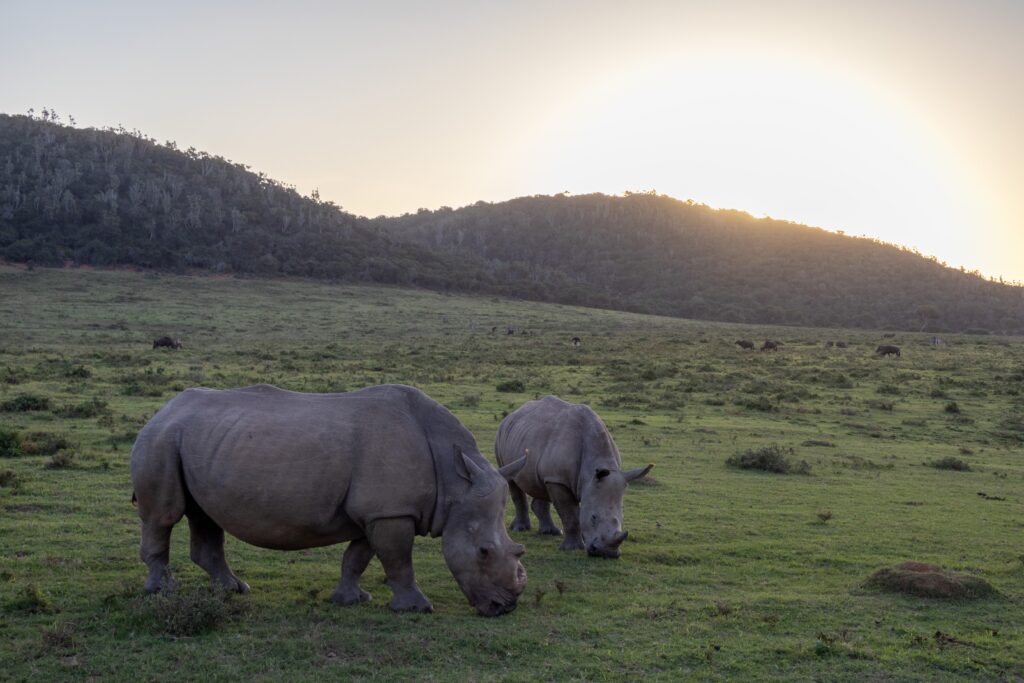
And we can see those benefits across the Eastern Cape. The Eastern Cape is a region of globally important biodiversity, home to significant populations of black and southern white rhino. The Kariega Game Reserve has not lost a single rhino to poaching since 2012, and the province has maintained one of the lowest poaching rates across the entirety of South Africa.
Conservation and community are intrinsically linked, and it is only by investing in and supporting both that the other will thrive. The very first line of defence for nature is the people who live alongside it.